


Fantasy Story Beats

Updated: May 3
According to John Truby's The Anatomy of Genres, the fantasy story genre is for stories about more than just surviving or being free. They are for stories about transforming to live our best life possible. Good and evil qualities are embodied by magic. The magic system warps and shifts to reflect the character of the people using it.
The life statement of a Fantasy story is always something like:
"To maximize the quality of your life, you must develop in stages until you are the best version of yourself."
Examples of stories that employ the Fantasy genre's beats:
K-Pop Demon Hunters
Words of Radiance
Alice in Wonderland (Johnny Depp)
Alcatraz vs. the Evil Librarians
The Witcher 3: Wild Hunt
The Way of Shadows
The Lord of the Rings
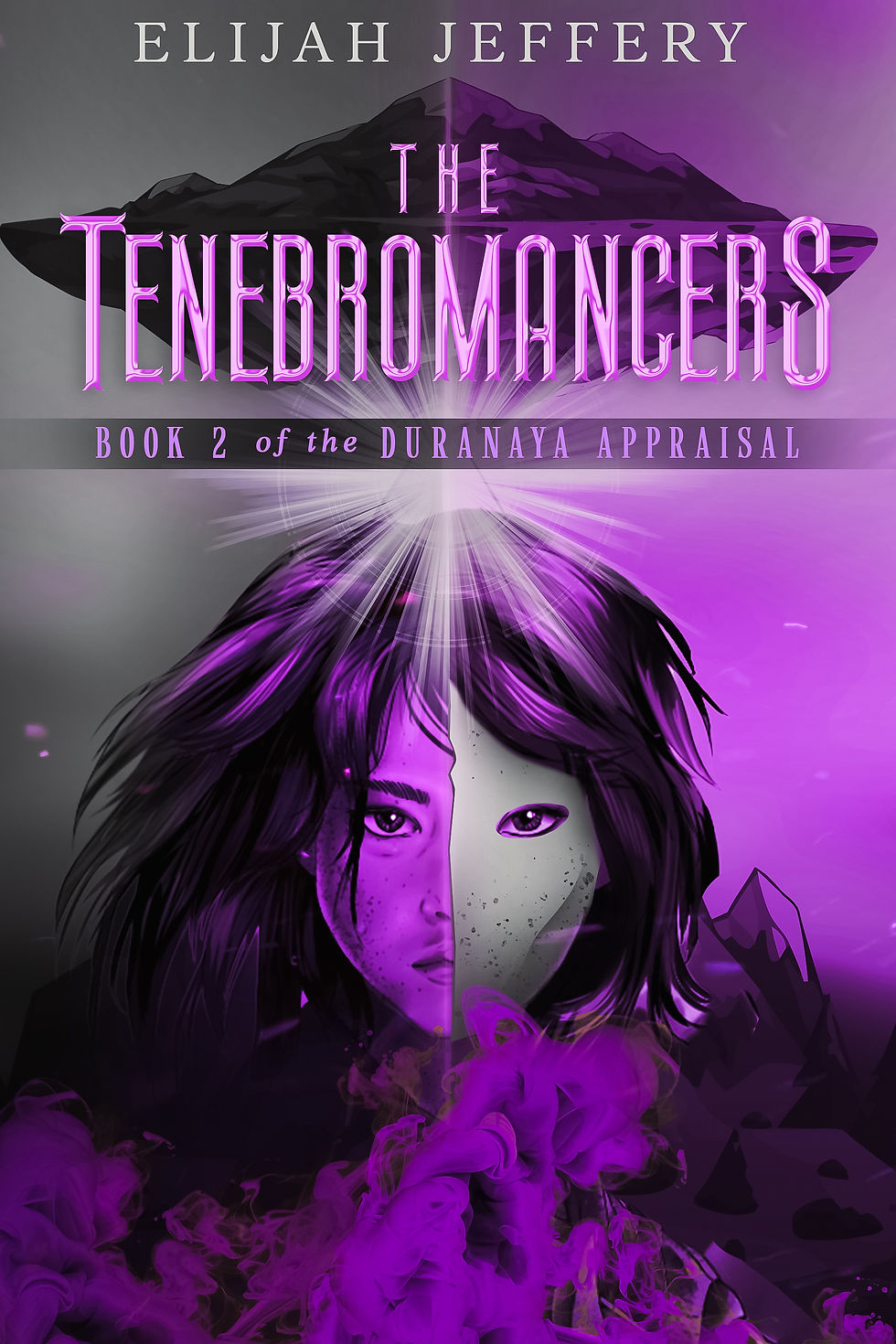
The Tenebromancers
Beyonders
Spoiler warning for all of the above. Do not click the dropdowns for the beats' examples if you wish to avoid spoilers.


Fantasy Story Recipe
Always read the ingredients before cooking any recipe. The best way to describe these ingredients is with their name, a brief description, and up to two examples. (see examples by clicking the dropdown arrows).
To write a Fantasy genre story, you will need:
Story World This beat is such a broad and fundamental part of a fantasy genre story. A fantasy story's world is arguably its most defining and fundamental beat. You must provide rules, costs, people, land, and technology for the story to compose itself within. Every fantasy world has a mundane realm and a fantastical realm. You can blur these together, but often the discovery of the fantastical realm is the inciting incident. One of the most important parts of the fantasy story world, however, is the magic system. To serve a fantasy genre story, the magic system needs to provide a way for the protagonist to show their growth over the story (such as getting stronger when they believe in themselves, for example).
Example 1: Wonderland from Alice in Wonderland. Nuff said.
Example 2: Triwalo from the Duranaya Appraisal books begins life in a small, out-of-the-way village. When the armies of the underworld come and she flees for her life, she is saved and taken in by a cult that introduces her to the world of dangerous, corrupting magic. When the mundane world was threatened, she had no option but the fantastical world.
Hero: Explorer A fantasy story with such a different world from our own needs a protagonist who explores it. This can be accomplished in a variety of ways, such as a young character coming of age, a portal depositing someone in a completely different place, or a character who must travel a great distance within a world that they are only familiar with a small part of.
Example 1: Shallan Davar from Words of Radiance must travel all the way from Kharbranth to the Shattered Plains. This makes her an excellent protagonist for a fantasy story, since even though she is not entering an alien world, she (and the audience) is going to need to learn so much about it to accomplish her journey that she might as well be.
Example 2: Azoth from The Way of Shadows books is taken in as a boy to become an assassin under the tutelage of the legendary Durzo Blint. He must explore the world of murder, politics, magic, and much more in order to survive and protect those he should not care about.
Weakness-Need: Repressed and Blinded The main character of a fantasy story must have a weakness-need that the fantasy world can challenge. The fantasy world may accomplish this with the solution or opposite of that need, or it may accomplish this by agreeing with the character's weakness-need and serving as an example of the consequences of that weakness.
Example 1: Reph from Duranaya lives with a high degree of self-hatred for her criminal past and her inadequacy compared to those she admires. When she learns that she also has access to taboo magic in her blood, her world changes and forces her to confront her self-hatred in a new context.
Example 2: Rumi from K-Pop Demon Hunters lives in fear that those around her will find out that she is part-demon. Her weakness-need, like many fantasy characters, is to accept herself for who she is and to truly trust those around her.
Desire: Explore an Imaginary World The main character's weakness-need can only be confronted if they explore the fantasy world. This is why you made them an explorer. The main character needs to have a strong desire to explore the fantastical world that is so different from their own, even though it will be uncomfortable and dangerous for them to do so. Often, they are exploring to avoid confronting their weakness-need.
Example 1: Alice wants to escape her imminent wedding by fleeing and finding a place to think. As is often the case for fantasy characters, the moment she escapes the mundane world, she wants to return to it. This desire to return home is actually a desire to explore the fantasy world, as long as the things Alice and characters like her need to do to return home force them to explore.
Example 2: After his life is threatened by the Evil Librarians, Alcatraz decides to go along with the Free Kingdomers to get back his inheritance. He'll need to explore the world the Librarians have hidden from him all this time in order to do so so he can retun to the "normal" world.
Character Web: Fantastic Characters The fantasy protagonist needs to be supported by a web of characters from the fantasy world who shine a light on both the world and the protagonist. Some exist to demonstrate the magic, others to anchor locations, but most if not all serve to highlight the main character's weakness-need, especially opponents.
Example 1: Zoey and Mira each serve to show different sides of Rumi's personality, from her whimsy to her discipline and professionalism. Both characters, however, share her insecurity and self-loathing.
Example 2: Along the way to the Shattered Plains, Shallan literally shares her mind with other characters who directly showcase different aspects of her weakness-need (or serve to hide it). She also encounters and loses various mentor figures, from Jasnah to Tyn to Mraize.
Opponent: Authorities Include opponent(s) whose job is to threaten the goodness (or enforce the evil) of the fantastical world. They almost always do this from a position of power and authority. They serve to provide the conflict the exploring main character needs to turn this into a story with stakes.
Example 1: Maldor from the Beyonders trilogy is the last wizard in Lyrian, and he is leveraging his monopoly on magical power to the fullest extent to force the world under his rule. His varied tactics, from hitmen to political maneauvering to paradise traps, force the protagonists to confront their weaknesses and raise the stakes dramatically.
Example 2: The demon Gwi-ma rules over the world of demons, and it is his hunger for souls (and the designs of his minion Jinu) that instigates all the schemes in the story that force Rumi to confront her own demonic identity.
Plan Take the desire line and feed it through your story world and opponents to create a plan of action for your protagonist. Remember that this plan should fail and need changing, until eventually the plan unites the character's desire and weakness-need.
Example 1: Alice wants to return to the real world and leave Wonderland, but she gradually accepts that in order to do so she must slay the Jabberwocky and in doing so assume control of her own life instead of always running away. She must learn she cannot "wake up" from her own life.
Example 2: Rumi plans to strike a deal with Jinu to stop the demons from interfering with the Golden Honmoon. Over the story, circumstances gradually force her to abandon this plan that allows her to keep her demonic ancestry secret.
Passageways Between Worlds In one form or another, every fantasy story needs a sub-world that connects the two realms. The purpose of this sub-world is to help the audience suspend disbelief, to justify the "newness" of the world to the protagonist who it is so foreign to.
Example 1: Jason and Rachel from Beyonders each get transported to Lyrian in different ways. Jason gets swallowed by a hippo in the zoo he works at, and Rachel wanders the wrong way in a canyon on a trip with her parents.
Example 2: Triwalo awakens in the Cult of Clarity after succumbing to exhaustion. Her grandmother is nowhere to be seen, and she is surrounded by children she doesn't know and adults who hold her life in their hands.
Journey through Subworlds You have the explorer. You have the world. You have the threats. You have the goal. Now make the character explore as much of the world as you can. All the smaller settings within the larger setting are what make the larger setting worth exploring.
Example 1: In order to collect the syllables of the word that will unmake Maldor, Jason and Rachel must travel across Lyrian to a wide variety of locations where the syllables are kept. One subworld is the city of Trensicourt. Another is the Harthenham palace.
Example 2: Alice travels through several places to learn how to leave Wonderland and to defeat the Jabberwocky. The Mad Hatter's Tea Party, the palace of the Red Queen, the desolate village of the last futterwacken, and the chess board battlefield.
The Super Magical Moment What does your world look like when all is right? Before the climax where the story is resolved, include powerful moments of right-ness that are only possible because of the fantasy world's differences from our world. These impact the reader and give emotional weight to the rest of the beats. There must be at least one such magical moment, but more is better.
Example 1: In The Witcher, when Geralt finally finds Ciri, and thinks he was too late and that she's dead, it destroys him. When it turns out that she was still alive, just hiding outside her body in a way that made her seem dead to his witcher senses, the scene becomes transcendant. All the terror and grief and misery in Geralt is washed away by Ciri's power restoring her to life, replaced with the joy of a father who has found his daughter at long last.
Example 2: When Shallan searches Bluth's body, she finds the sketch she drew of him using her photographic memory and her pereception of him as a man with the potential to do good. Her supernatural power to crystalize images in her mind and her ability to see the capacity for good in people combines with the context of Bluth's death to create a powerful moment when things are not idyllic, but they feel right.
Battle: The Final Test At the end of a fantasy story, the opponent and the protagonist must clash in one way or another, be it through a grand puzzle or an actual fight.
Alice and the armies of the White Queen face the Jabberwocky and the armies of the Queen of Hearts.
Jason, with the entire word to unmake Maldor in his possession, is captured and granted an audience with the emperor. He need only to say it in the dark lord's presence...
Self-Revelation: Free and Fun In the final battle, the protagonist must display the lessons they've learned over the course of the story, and they often do this by leveraging the magic system. The reason this is a separate beat from Battle: The Final Test is because it is so very easy to only do one without the other.
Example 1: Rumi and Jinu are able to defeat Gwi-ma by accepting, not rejecting, the demonic parts of themselves the demon king has been using against them. Gwi-ma loses power over them when they reject the guilt that has governed their actions over the entire story up to this point.
Example 2: Triwalo is finally able to defeat her cultist manipulators and unshackle herself from their control when she reclaims her personhood. She is no longer their weapon. She is her own woman, and she does not hurt people because she is told.
Notes
Fantasy, along with Sci-Fi, is one of the most common "window-dressing" genres. It is easy for a story to be a very different genre with a little bit of fantasy mixed in, or for the "fantasy" of the story to be entirely aesthetic and not part of how the story's structure works. For example, it is common for Action stories to use magic, but not to portray the character's internal or external progress with it or develop the character like a Fantasy story. It is also common for magic systems to become so defined and so integrated to society that they turn the story into a Sci-Fi story.
It is very easy for Fantasy to mix with other genres, which is why it is so common. Fantasy with Coming of Age, Fantasy with Sci-Fi, Fantasy with Horror, Fantasy with Myth, it's a highly flexible recipe that lends itself to mixing with others.

Comments